
Chemical Processing
The right elastomer for the right chemistry — concentration, temperature, and fluid combinations that eliminate half the options before you look at anything else.
Chemical processing puts seal materials through the most aggressive fluid environments found in any industry. Concentrated sulphuric acid, sodium hydroxide, chlorine, methanol, toluene, chlorinated solvents, and oxidising acids each attack elastomers by different mechanisms — swelling, hardening, surface degradation, or chain scission depending on the compound and the chemistry. The rule in chemical plant seal selection is that general-purpose compounds do not exist: every application requires verifying the specific chemical, concentration, and temperature against the compound's resistance data before specifying. PTFE, FFKM, and FKM cover the vast majority of chemical processing seal requirements — with EPDM handling the aqueous and alkaline side of the chemistry range. Getting this decision right at the specification stage costs nothing; getting it wrong costs a shutdown.
Our Products
ELASFOR Product Line — Chemical Processing Applications
| ELASFOR Product | Chemical Processing Application |
|---|---|
 70×70
70×70
O-rings — FFKM, FKM, EPDM, PTFE-encapsulated
|
Reactor vessel ports and nozzles, pump and valve body connections, heat exchanger shell covers, instrument isolation fittings, and process gas manifolds — FFKM for aggressive organic solvents, concentrated acids, and oxidising agents; FKM for hydrocarbon-based chemicals and moderate acid/base service; EPDM for strong alkaline (NaOH, KOH) and aqueous process streams; PTFE-encapsulated where full elastomeric inertness is required with O-ring geometry |
 70×70
70×70
|
Valve stem chevron V-packing stacks, chemical pump shaft lip seals, spring-energized PTFE seals for rotating equipment in aggressive chemical service, PTFE envelope gaskets for flanges handling oxidising acids — PTFE is chemically inert to virtually all acids, alkalines, and organic solvents except molten alkali metals and elemental fluorine; spring-energized designs compensate for PTFE's low elasticity in dynamic sealing applications |
| Reactor flanges, pressure vessel manhole connections, heat exchanger head gaskets, and chemical storage tank nozzle seals handling concentrated acids, caustics, and solvents — ePTFE gaskets and joint sealant for near-universal chemical compatibility with low bolt load requirement; FFKM static seals for the highest-severity combined temperature and chemistry applications | |
 70×70
70×70
|
Process piping flange gaskets, reactor and vessel inspection cover gaskets, pump casing gaskets, and chemical storage tank access gaskets — cut from FKM, EPDM, PTFE, ePTFE, or CNAF sheet depending on chemical service; PTFE envelope gaskets (PTFE shell over compressed fibre core) for aggressive acid service where full PTFE cold-flow is a concern; custom profiles to drawing or ASME B16.21 standard dimensions |
 70×70
70×70
|
Chemical transfer pump shaft seals, reactor agitator seals, and mixer shaft seals for hazardous or corrosive fluid service — FFKM secondary O-rings for chemically aggressive seal assemblies; SiC/SiC face pairs for abrasive slurry or crystallising chemical service; dual mechanical seals with barrier fluid (API Plan 53) for toxic or highly volatile chemical fluids |
 70×70
70×70
|
Process valve stem gland packing and chemical pump gland packing — PTFE braided packing for most chemical service (chemically inert, low-friction, FDA-compliant grades for dual-use facilities); PTFE/graphite combination for elevated temperature chemical service; pure graphite packing for high-temperature process valve glands where PTFE temperature limit is exceeded |
 70×70
70×70
|
Chemical storage tank hatch seals, reaction vessel access port seals, drum and IBC closure seals, chemical plant door and hatch seals — EPDM extrusions for alkaline and aqueous chemical environments; FKM profiles for hydrocarbon and moderate acid environments; PTFE co-extruded seals for the most aggressive acid and solvent contact applications |
 70×70
70×70
|
Diaphragm seals for chemical metering pumps and control valves, custom-profiled seals for proprietary reactor and vessel designs, bellows seals for chemical expansion joints, and moulded FFKM seals for high-severity chemical instrument connections where standard O-ring geometry cannot be used |

Chemical compatibility is concentration- and temperature-dependent — a compound rated for dilute HCl at 20°C may fail rapidly in concentrated HCl at 60°C. Provide the chemical name or CAS number, concentration (% w/w or mol/L), and operating temperature with your inquiry and we will verify compound compatibility before recommending a seal grade.
Applications
Common Sealing Applications

Reactor & Vessel Agitator Shaft Seals
Batch and continuous stirred-tank reactors (CSTR), glass-lined reactors, high-pressure autoclave agitators, and mixing vessels handling acids, caustics, solvents, chlorinated compounds, and reactive intermediates. Agitator shaft seals must seal against the process pressure and temperature, resist degradation from continuous chemical contact, and maintain a leak-free condition between planned maintenance shutdowns that may be 6–18 months apart.
Spring-energized PTFE lip seals are the preferred dynamic shaft seal on chemical reactors where elastomeric compounds lack chemical resistance — the spring compensates for PTFE's minimal elasticity, maintaining lip contact force as the PTFE lip wears during service. FFKM secondary O-rings in mechanical seal assemblies for the highest-severity chemistry (chlorine service, concentrated oxidising acids, aggressive solvents). Double mechanical seals with inert barrier fluid (nitrogen or compatible oil) for toxic chemical reactors where any process fluid release to atmosphere is unacceptable under process safety or environmental regulations. Verify that the barrier fluid is compatible with both the seal compound and the process chemistry in the event of primary seal failure.
ASME B31.3 (process piping) · ASME Section VIII (pressure vessels) · ISO 21049 / API 682 (mechanical seals) · ATEX Directive 2014/34/EU (explosive atmosphere equipment)

Chemical Transfer Pumps
Centrifugal pumps, gear pumps, and diaphragm pumps transferring concentrated acids (H₂SO₄, HCl, HNO₃, HF), caustics (NaOH, KOH 20–50%), organic solvents (toluene, MEK, methanol, dichloromethane), and oxidising agents (H₂O₂, peracetic acid, chlorine solutions). Chemical pump seals face the combined challenge of aggressive fluid chemistry, temperatures from ambient to 150°C in heated process lines, and in some cases particulate-laden or crystallising fluids that abrade face seal surfaces.
FFKM secondary O-rings in the seal assembly are non-negotiable for pumps handling concentrated mineral acids or oxidising agents — FKM, NBR, and EPDM secondary seals will fail in concentrated H₂SO₄, HNO₃, and chlorine solution service within weeks regardless of face material selection. SiC/SiC face pairs for crystallising chemicals (ammonium sulphate, sodium chloride, sodium carbonate solutions) where carbon face inserts would be quickly abraded by crystal formation at the seal interface. For HF acid service, specify FFKM compounds tested specifically for HF compatibility — not all FFKM grades perform equally in HF, and fluoride ion can attack certain ceramic face materials.
API 682 / ISO 21049 (mechanical seals) · ASME B73.1 (chemical process centrifugal pumps) · ATEX 2014/34/EU · ISO 15848-1 (fugitive emissions)
Process Valve Stem Seals & Packing
Gate valves, globe valves, ball valves, and butterfly valves on process piping handling the full range of chemical plant fluids — acids, caustics, solvents, oxidisers, and reactive intermediates. Chemical plant valves often have long actuated cycles (automated process control) combined with extended static periods under process pressure during steady-state operation, placing different demands on packing than manually-operated pipeline valves that cycle infrequently.
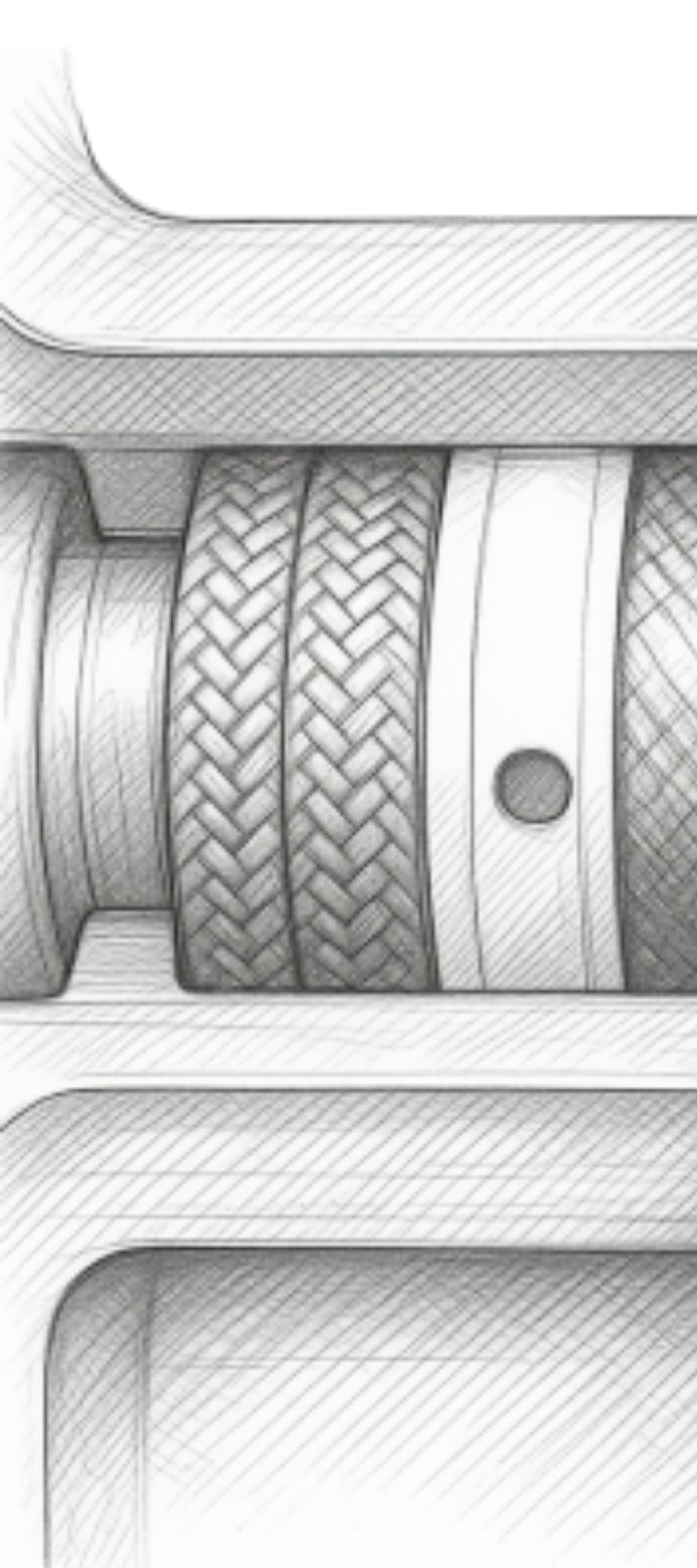
PTFE chevron V-packing is the standard for chemical plant valve stems — chemically inert across essentially the entire chemical compatibility table, low stem friction, and long service life. The V-packing set is self-adjusting under gland nut load, which reduces the retightening maintenance burden compared to braided packing sets. PTFE/graphite combination packing for elevated-temperature service (150–260°C) where pure PTFE approaches its upper working limit; graphite provides lubricity and thermal conductivity at temperatures where PTFE alone would become marginally flexible. Pure graphite packing for high-temperature process valves above 260°C — but confirm graphite compatibility with the specific process chemistry, as graphite is attacked by strong oxidising acids (fuming HNO₃, fuming H₂SO₄).
ASME B16.34 (valves for pressure-temperature ratings) · ISO 15848-1 (fugitive emissions) · API 622 (valve packing emission qualification) · ATEX 2014/34/EU

Heat Exchangers & Pressure Vessel Flanges
Shell-and-tube heat exchanger head gaskets and floating head covers, reactor pressure vessel manhole gaskets, chemical column flange connections, condenser and reboiler flange connections, and process vessel nozzle gaskets. Heat exchangers and pressure vessels in chemical plants undergo regular thermal cycling during start-up and shutdown, which relaxes bolt load through differential thermal expansion of the flange and gasket materials — re-torquing after first heat-up is essential for soft gasket materials and is frequently specified in process plant commissioning procedures.
ePTFE (expanded PTFE) is the preferred flange gasket material across most chemical plant piping — compatible with virtually all process chemicals at temperatures up to 260°C, near-zero compression set, and sufficient creep resistance under standard bolt loads to maintain seating stress between shutdowns without re-torquing. PTFE envelope gaskets (solid PTFE skin over compressed fibre core) where the bolt pattern is insufficient for full ePTFE compression, or where the compressed fibre core provides additional load-bearing capacity for high-pressure applications. FKM sheet gaskets for hydrocarbon service above 150°C where EPDM and CNAF lose stability and ePTFE cost is not justified by the chemical severity. Re-torque all soft chemical plant gaskets at operating temperature after first heat-up cycle.
ASME Section VIII Div. 1 (pressure vessels) · ASME B16.20 / B16.21 (gasket dimensions) · EN 1514-1 · EN 13185 (gasket leak testing) · TEMA (shell-and-tube heat exchangers)

Chemical Injection & Metering Systems
Chemical dosing systems on water treatment plants, industrial effluent treatment, cooling water treatment, chemical plant process control, and pH adjustment systems. Metering pumps inject concentrated chemicals (scale inhibitors, corrosion inhibitors, biocides, coagulants, concentrated acid and caustic for pH control) at precise flow rates. The diaphragm seal and check valve seats are in continuous contact with the concentrated chemical and must tolerate both the fluid chemistry and the mechanical fatigue of continuous reciprocating duty at elevated back-pressure.
PTFE-faced diaphragms (PTFE-coated EPDM or FKM substrate) cover the broadest chemical compatibility range for metering pump service — PTFE chemical contact face combined with elastomeric substrate flexibility for the fatigue cycling. Pure PTFE diaphragms for the highest-severity chemical service where even PTFE-coated substrates show edge attack at the bond line. EPDM is the correct choice for alkaline chemical dosing (caustic soda, lime, sodium hypochlorite at ambient temperature) — EPDM handles strong alkaline solutions and dilute oxidising biocides far better than NBR or FKM. Sodium hypochlorite (bleach) at concentrations above 5% and elevated temperature is aggressive toward most elastomers including EPDM — specify PTFE-faced diaphragms for concentrated hypochlorite service and at temperatures above 40°C.
ASME B31.3 (process piping) · ISO 15783 (chemical dosing pumps) · ATEX 2014/34/EU · EN 12050 (dosing pump standard) · NSF/ANSI 61 (water treatment chemical contact where applicable)
Compliance
Governing Standards
| Standard | Scope | What It Covers for Seals |
|---|---|---|
| ASME B31.3 | Process piping | Design, materials, fabrication, and testing requirements for chemical plant process piping; defines acceptable gasket materials and pressure-temperature ratings for flanged connections in chemical service — the primary piping code reference for chemical processing facilities in North America |
| ASME Section VIII Div. 1 | Pressure vessels | Construction and inspection requirements for unfired pressure vessels; gasket and seating stress calculations for flanged vessel connections are governed by ASME Appendix 2, which drives gasket factor (m) and seating stress (y) selection — these values vary significantly between gasket materials and determine achievable sealing pressure |
| API 682 / ISO 21049 | Mechanical seals — chemical and petroleum process pumps | Seal category, arrangement, and piping plan requirements for process pump mechanical seals; defines secondary seal (O-ring) material requirements, face material combinations, and barrier/buffer fluid system design for chemical service pump seals |
| ASME B73.1 | Horizontal end-suction centrifugal pumps for chemical process | Dimensional and materials standards for chemical process pumps; defines seal chamber dimensions and stuffing box geometry that governs mechanical seal and gland packing selection for chemical plant pump installations |
| EN 13185 | Gaskets — leak testing | Test methods for evaluating gasket leakage performance under pressure and temperature conditions representative of chemical plant service; used to qualify gasket materials and designs for specific chemical plant piping applications in European-standard facilities |
| ISO 15848-1 | Industrial valves — fugitive emissions | Classification and test methods for valve stem seal (packing) fugitive emission performance; increasingly mandatory for chemical plant valves in regulated jurisdictions — driving PTFE low-emission packing specifications for valves handling VOC-regulated substances |
| ATEX Directive 2014/34/EU | Equipment for explosive atmospheres | Covers chemical plant zones where flammable vapour or dust is present; seals on equipment in ATEX zones must not introduce ignition sources and must be compatible with zone classification — conductive or static-dissipative elastomers are required in ATEX zone 0/1 applications to safely bleed static charge to ground and prevent spark discharge |
| NSF/ANSI 61 | Drinking water system components — health effects | Extractable limits for materials in contact with potable water; relevant for chemical plant facilities that produce water treatment chemicals or where the chemical process produces drinking water-contact products — seal and gasket compounds must be NSF 61 certified where required |
| ASTM D543 | Resistance of plastics to chemical reagents | Standard test method for evaluating the effects of chemical immersion on plastics and elastomers — weight change, dimensional change, and strength retention; used to generate compatibility data for seal compounds in specific chemical environments when published resistance charts do not cover the exact combination |
Need seals for chemical processing?
Send us your part number or application details.
Request a Quote