
Mechanical Face Seals
Duo-cone floating seals for rotating applications in harsh environments — metal-to-metal sealing where abrasion destroys conventional lip seals.

Overview
High-performance sealing for rotating applications in severe conditions
Mechanical face seals (also called floating seals or duo-cone seals) are the standard solution when heavy equipment operates in conditions that combine contamination, abrasion, and high loads — track drives on excavators, final drives on bulldozers, wheel hub assemblies on mining haul trucks, and gear cases on agricultural implements.
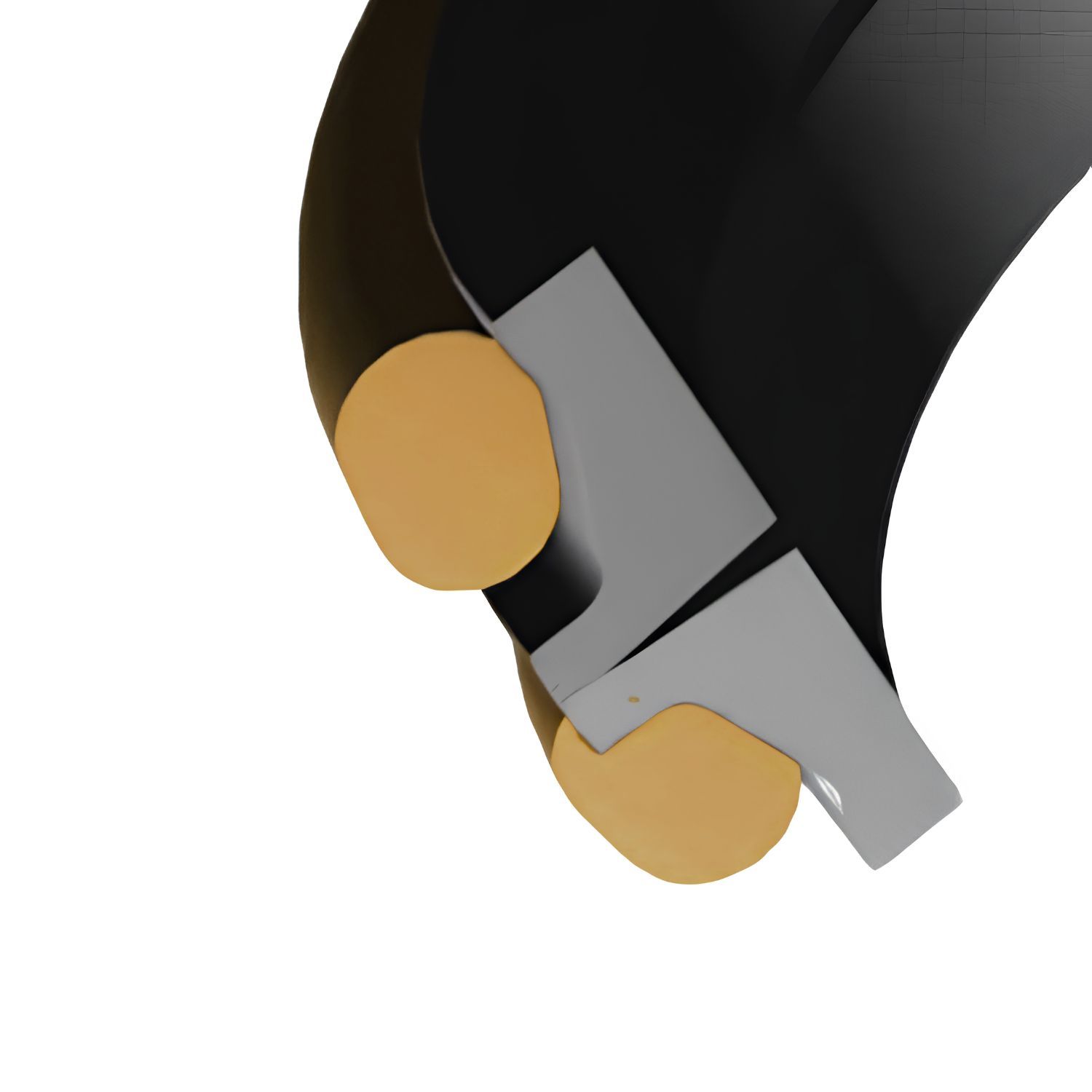
The design is fundamentally different from lip seals. Two identical lapped metal rings (the sealing rings) are pushed into face contact by elastomeric O-rings (the toric elements) that act as both spring and secondary seal. The sealing interface is a flat metal-to-metal contact zone — there is no rubber element exposed to abrasion or chemical attack at the primary sealing face.
The metal-to-metal contact surface is lapped to a flatness and surface finish measured in millionths of an inch. When installed correctly with the right lubricant film at the interface, mechanical face seals run indefinitely with virtually no wear at the sealing faces.
Design Reference
Construction and installation parameters
How mechanical face seals work
| Component | Function | Material |
|---|---|---|
| Sealing rings (2) | Primary sealing element. Two identical lapped rings pressed into face contact. The sealing interface is a thin hydrodynamic oil film between the two faces. | Cast iron (standard), ductile iron, hardened steel, or specialty alloys for corrosive environments |
| Toric elements (2 O-rings) | Act as spring to maintain sealing face contact force and as secondary seal against the housing/shaft bore. Accommodate axial and angular misalignment. | NBR (standard), FKM (elevated temperature or chemical service), silicone (extreme cold start) |
| Sealing face lapping | Flatness and surface finish of the metal faces determines sealing effectiveness. The oil film between the two faces carries the load and prevents dry running. | Lapping tolerance: typically <0.0003 mm flatness. Surface finish Ra <0.05 µm (mirror finish). |
Installation and failure modes
| Failure Mode | Root Cause | Prevention |
|---|---|---|
| Leakage from day one | Contaminated or damaged sealing face during handling or installation | Clean gloves, clean installation area, inspect faces before assembly, follow handling procedure |
| Toric element failure | Chemical incompatibility, over-compression, or incorrect toric size for the housing | Verify toric material compatibility with lubricant. Use the correct housing dimension table. |
| Face wear / scoring | Loss of lubricant film — running dry, lubricant contamination, incorrect oil viscosity | Maintain the correct lubricant level and quality. Verify the oil film is established before load application. |
| Corrosion of sealing faces | Water ingress, chemical attack on standard cast iron rings | Specify ductile iron or stainless alloy rings for wet or corrosive environments |
Materials
Ring and toric element materials
Cast Iron Rings
Ductile Iron Rings
Hardened Steel Rings
NBR Toric Elements
FKM Toric Elements
Silicone Toric Elements
Need mechanical face seals?
Provide shaft or housing diameter, the application (equipment type and position), and lubricant type — we'll specify the correct ring material and toric element, and supply to your dimensions.
Request a Quote