
Vulcanizations
When a standard O-ring won't fit the bore — a vulcanized joint seals any diameter, any cross-section, any elastomer.
Overview
Seamless closed loops for any geometry
O-ring vulcanization is the process of cutting a length of extruded cord and bonding the two ends into a closed loop using heat, pressure, and chemical adhesive. The result is an O-ring with a specific inner diameter and cross-section that is not constrained by standard AS568 or metric catalogue dimensions.
Vulcanized O-rings are the correct solution when the groove inner diameter is too large for any standard O-ring, when a non-standard cross-section is required, when the material is only available in cord form, or when lead time on a custom molded ring is not acceptable.
The critical variable in vulcanization is bond quality. A properly vulcanized joint is chemically and mechanically indistinguishable from the parent material — it will not fail at the joint before the rest of the ring. A poorly executed joint is a weak point that fails under pressure, temperature cycling, or compression set recovery.
Applications
When vulcanized O-rings are the right choice
Application comparison
| Situation | Solution | Notes |
|---|---|---|
| Standard diameter, standard cross-section | Catalogue O-ring (AS568 or metric) | Always the first choice. Lower cost, faster supply, more consistent quality. |
| Non-standard ID, standard cross-section | Vulcanized O-ring from cord | Most common vulcanization application. Cord is cut to the exact circumference required and bonded. |
| Non-standard cross-section | Custom extruded cord, then vulcanized | Custom cord extrusion required. Lead time longer than standard cord. Good for large quantities. |
| Very large diameter (>2,000 mm) | Vulcanized — molded tooling not economical | Mold tooling for large rings is expensive. Vulcanization is the economical and practical alternative for large-bore equipment. |
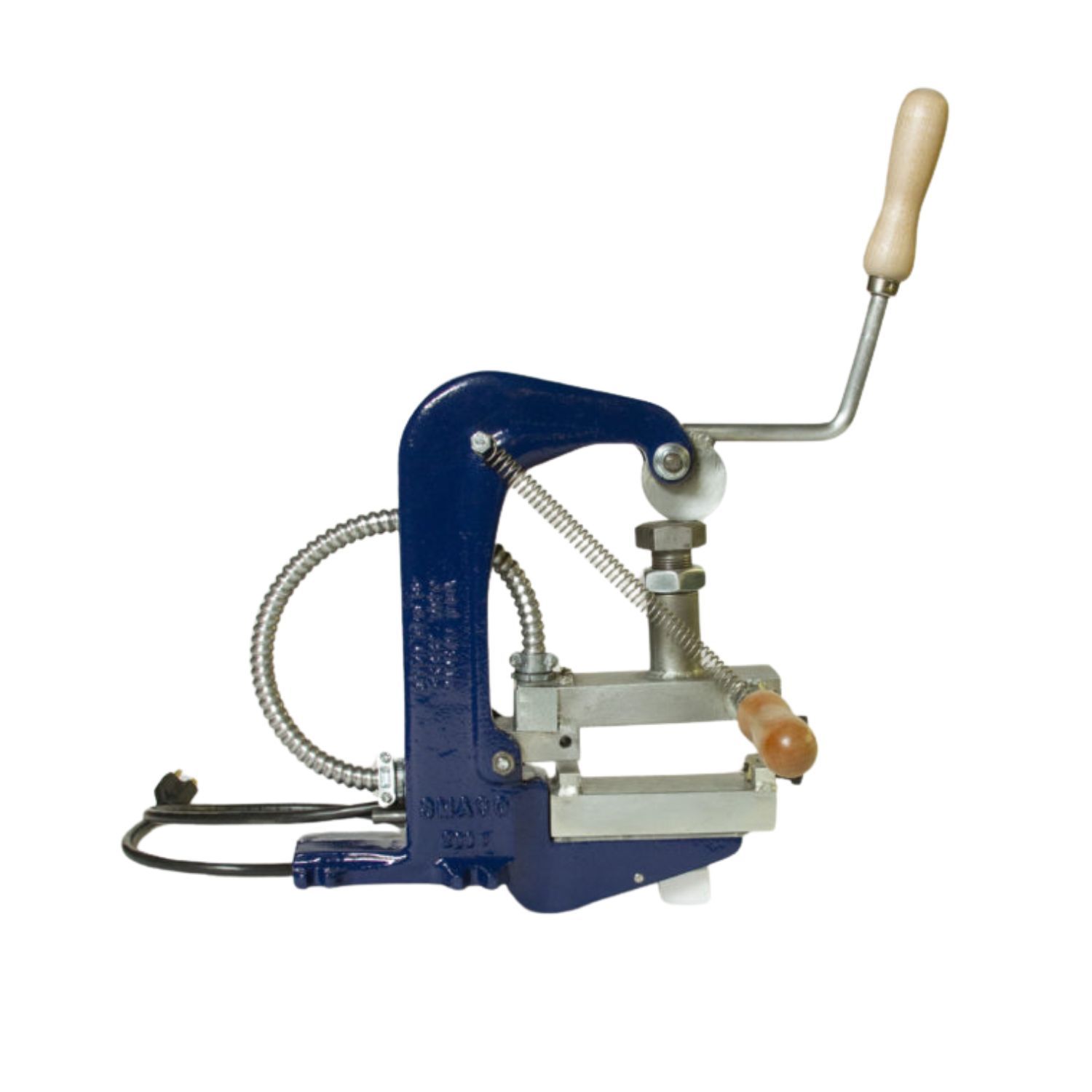
| Emergency replacement, groove inaccessible | On-site vulcanization | If the groove requires the ring to be installed before assembly — and the assembly is already in place — on-site vulcanization in the groove is the only option. |
Technical Article
On-site vulcanization — details that affect bond quality
On-site vulcanization is a practical skill that produces reliable bonds when the procedure is followed correctly. The four points below are the details that most often separate a joint that holds from one that fails.
1Always start from a fresh cut
A recent cut exposes a clean, active surface — this is essential to obtain a strong chemical bond during vulcanization. A cut made hours or days earlier has already begun to oxidize and will not bond as reliably. Cut both ends immediately before vulcanizing, never in advance.
2Use fresh adhesive with full traceability
Always check the manufacturing date and the date written on the adhesive container. Adhesives have a finite shelf life — expired adhesive gives unpredictable bond strength. Use adhesive that has a valid certificate of conformity with a traceable batch number. This is especially important for food, pharma, and pressure-vessel applications.
3Control mold temperature precisely
Vulcanization is a thermally activated chemical reaction. Both under-temperature (incomplete cure) and over-temperature (scorching) degrade bond strength. A reliable contact thermometer is not optional — a mold that "feels hot" is not a calibrated temperature measurement. Set the temperature, verify it, and hold it for the full cure cycle.
4Use the right tools for clean cuts
A ragged, angled, or contaminated cut face creates a weak bond zone and reduces the effective contact area at the joint. A portable guillotine cutter or a miter shear produces straight, perpendicular, clean ends. A knife dragged across the cord at an angle is not adequate for structural vulcanization. The tool investment is trivial compared to the cost of a failed seal.

Design Reference
Specifying a vulcanized O-ring
How to specify the correct dimensions
| Dimension | How to Determine | Notes |
|---|---|---|
| Cross-section diameter (CS) | Measure the groove depth and calculate target compression ratio (15–25% static). CS = groove depth ÷ (1 – compression %) | Use a standard cord cross-section if possible — NBR cord is available in standard cross-sections from 1.78 mm to 12.7 mm and beyond. |
| Inner diameter (ID) | For face seal grooves: groove mean diameter. For piston seal: bore ID − 2× groove depth − 2× stretch allowance. | Vulcanized rings require 1–3% stretch for installation on static grooves. Account for this in the cord length calculation: cord length = (ID + stretch) × π. |
| Material | Match to the fluid, temperature, and pressure per the same selection criteria as standard O-rings. | All cord materials are available: NBR, EPDM, FKM, Silicone, HNBR, Neoprene. Custom cord in non-standard compounds available on request. |
Vulcanized O-rings do not have standard tolerances identical to molded O-rings. The joint introduces a local dimensional variation. For precision grooves, specify the tolerance on the joint diameter and confirm the achievable tolerance with us before designing the groove.
Need a vulcanized O-ring?
Give us the cross-section diameter, the inner diameter, the material, and the application — we'll produce it to your dimensions and confirm bond quality before shipment.
Request a Quote