
V-Rings
Axially-acting shaft protectors — mount on the shaft, seal against a counter face, throw contamination clear by centrifugal action.
Overview
Axially-acting shaft protectors
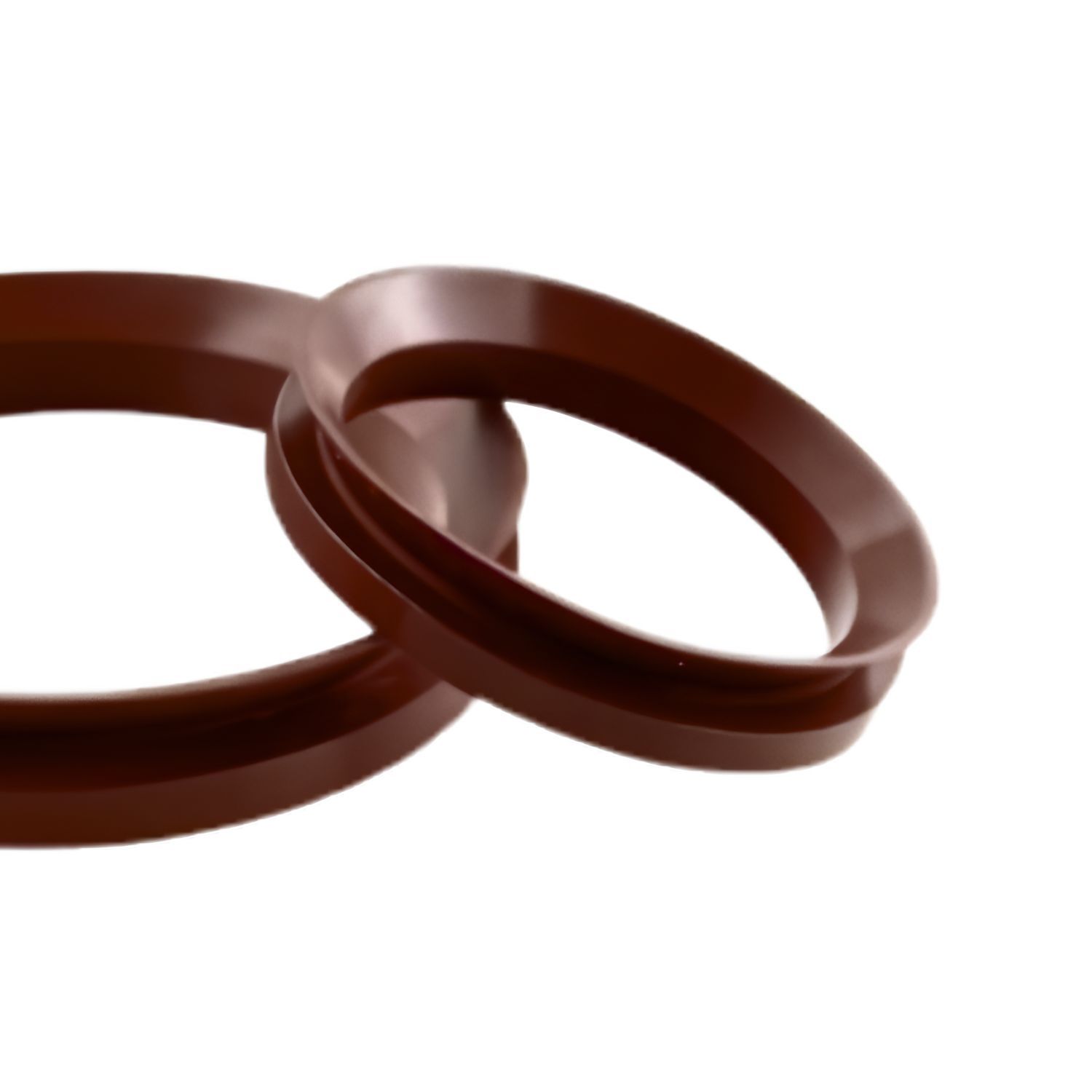
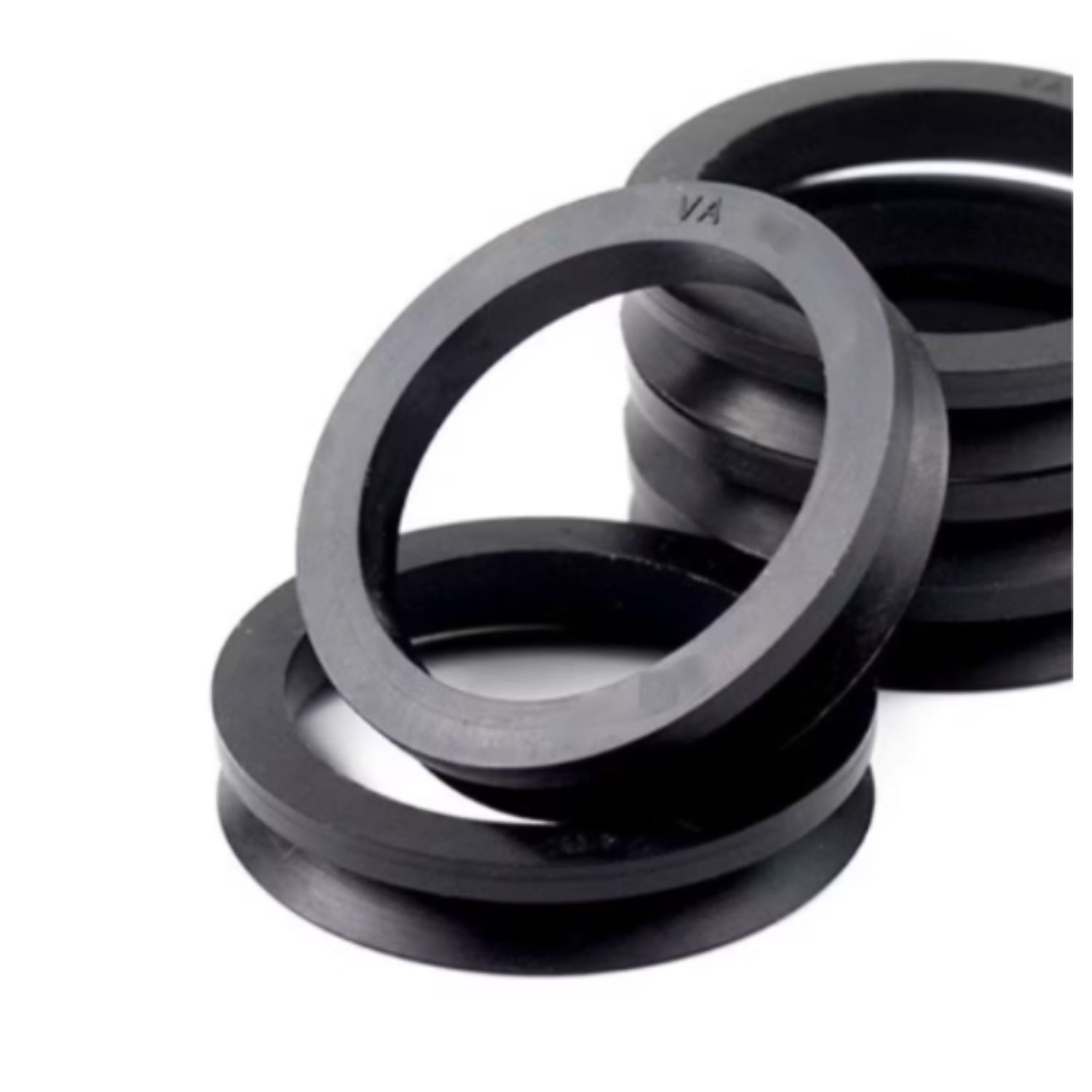
V-rings (also called V-seals, front seals, or slinger seals) are one-piece rubber seals that mount directly on the rotating shaft and seal axially against a stationary counter face. Unlike radial lip seals, they require no bore — the seal stretches over the shaft and rotates with it, throwing contamination away by centrifugal action.
Their primary role is exclusion: keeping abrasive particles, mud, water, and debris out of the bearing housing. They are not designed to retain high-pressure lubricants — for that you need a radial lip seal. But as a contamination barrier in front of the primary seal, a V-ring dramatically extends bearing and seal life in dirty environments.
V-rings are standard equipment on agricultural machinery, mining conveyors, quarry equipment, road construction machines, and any rotating application exposed to heavy contamination. We supply all four standard types in NBR, FKM, and EPDM.
Product Types
Four standard V-ring configurations
Each type covers a different shaft diameter range and operating condition. They are not interchangeable — selecting the wrong type for the shaft size or application leads to premature seal failure or inadequate contamination exclusion.

Type VA
General rotary sealing. Wide axial mounting space. Standard shaft diameters. Moderate speeds and contamination levels.

Type S
Compact axial profile. Small shaft diameters. Lower friction — suitable for high shaft speeds where heat is a constraint.

Type L
Large shaft diameters (>300 mm). Tolerates shaft runout and misalignment. Soft axial contact — low bearing load on counter face.

Type E
High rotation speed. Vibration and misalignment resistance. Excellent mechanical strength — heavy-duty industrial applications.
Design Reference
Installation & application parameters
Key installation parameters
V-ring sealing performance depends entirely on correct axial preload and shaft surface condition. These are the parameters that most frequently cause field failures.
| Parameter | Requirement | Notes |
|---|---|---|
| Axial preload (compression) | 1–3 mm axial compression against counter face (type-dependent) | Check the manufacturer's table for each type and shaft diameter. Over-compression generates heat and rapid wear. Under-compression loses the seal at speed. |
| Counter face surface finish | Ra 0.8–1.6 µm (16–63 µin) | Too smooth and the elastomer aquaplanes on lubricant films. Too rough and the lip wears prematurely. |
| Shaft diameter tolerance | V-ring fits shaft by stretch — tolerance per standard stretch table | V-rings must be stretched onto the shaft. If a V-ring slides on easily without tools, it will spin on the shaft and not seal. |
| Shaft speed | Up to 12 m/s (Type VA); up to 20 m/s (Type E) | Exceeding rated speed causes the lip to flutter away from the counter face. At high speed, centrifugal slinging becomes the primary exclusion mechanism. |
| Operating temperature | –40°C to +100°C (NBR); –30°C to +200°C (FKM) | NBR covers the majority of applications. FKM is required for high-temperature zones or chemical environments. |
Typical applications by industry
| Industry / Equipment | Application | Why V-ring |
|---|---|---|
| Mining & quarry | Conveyor tail drums, crusher shafts, screen bearings | Abrasive silica, rock dust, and water — conditions that destroy radial lip seals within weeks if unprotected |
| Agriculture | Tractor PTO shafts, combine harvester drives, plows | Soil, sand, chaff, and water ingress. V-ring often used as an additional exclusion seal in front of the primary lip seal. |
| Construction machinery | Excavator swing drives, vibrating roller shafts | Heavy mud, hydraulic fluid contamination, constant vibration |
| Industrial machinery | Fan shafts, gearbox output shafts, pump shafts | Coolant mist, metalworking fluids, paper pulp, sawdust |
Materials
Elastomer selection
NBR (Nitrile)
FKM (Viton®)
EPDM
Silicone (VMQ)
Need V-rings for your rotating equipment?
Give us shaft diameter, shaft speed, and contamination environment — we'll specify the correct type and elastomer, and supply to your quantity.
Request a Quote