
Plain Bearings & Bushings
Sliding bearings for rotary and linear motion — every size and material, from standard bushings to custom-machined sleeves.
Overview
Unmatched strength and longevity in sliding motion
Plain bearings (also called sliding bearings or bushings) are the simplest and often the most reliable solution for supporting loads in rotating or linear motion applications. They operate on the principle of a sliding contact between two surfaces — a shaft and a bore — separated by a thin film of lubricant or a low-friction bearing material that eliminates direct metal-to-metal contact.
The concept is not new: Babbitt metal, invented in 1839, was the bearing material that made the industrial revolution's steam-powered machinery possible. Since then, bearing materials have evolved dramatically — today's self-lubricating PTFE composite, filament-wound fiberglass, and sintered bronze bearings deliver performance that Babbitt-era engineers couldn't have imagined.
The distinction between a long-running bearing and one that fails in months comes down to material quality, dimensional precision, and alloy composition — not the appearance of the part. We supply bearings in every size and material, from standard DIN catalogue dimensions to custom-machined sleeves and flanged bushings.
Design Reference
Selection parameters
Material selection by application
| Material | PV Limit (MPa·m/s) | Best Application | Limitations |
|---|---|---|---|
| Bronze (CuSn, CuPb) | 1.5–3.0 | Heavily loaded, well-lubricated. Hydraulic cylinders, construction equipment pins, marine. | Requires good lubrication. Galvanic compatibility must be considered with shaft material. |
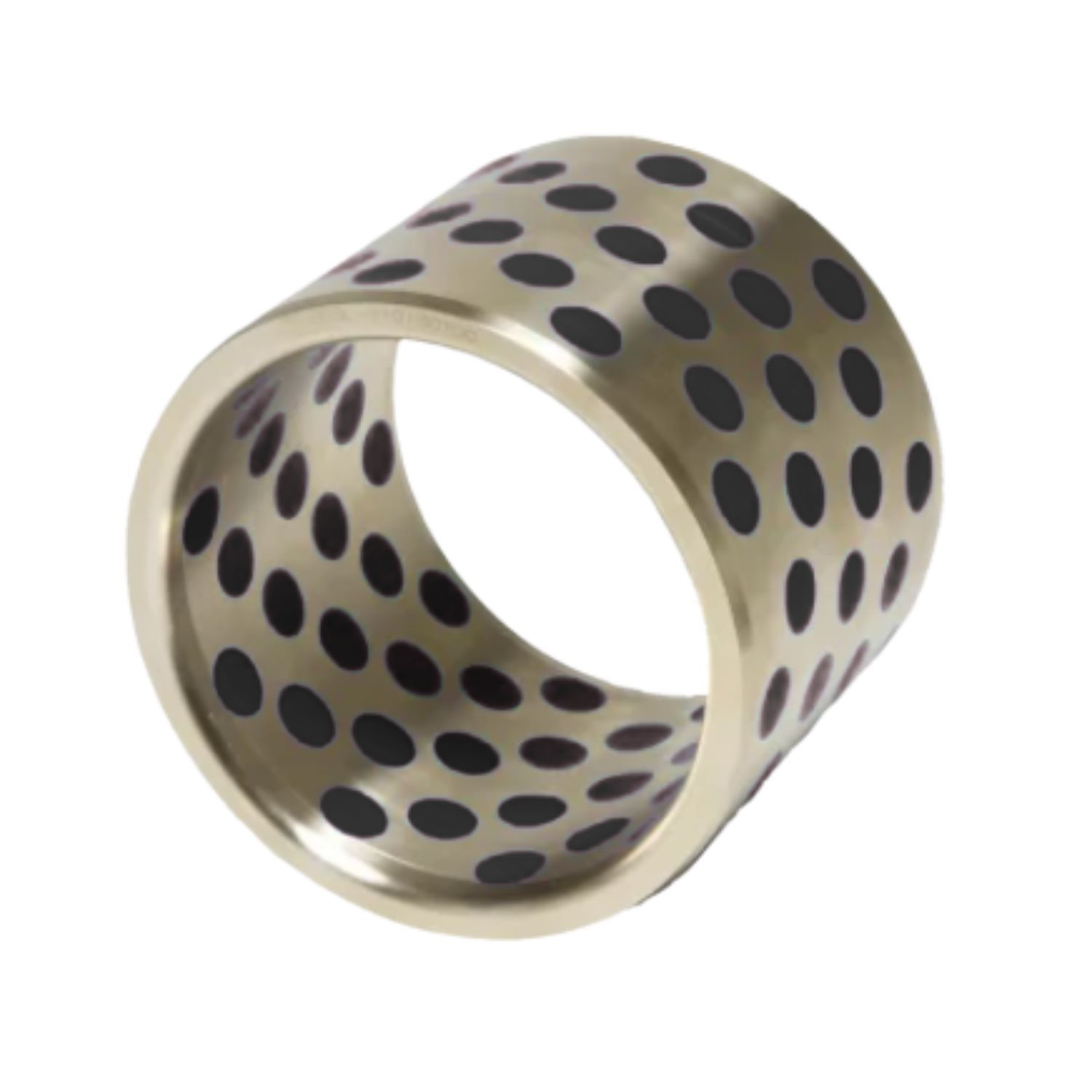
| Bronze + graphite plugs | 1.0–2.0 | Oscillating motion, slow-speed high-load. Excavator linkages, agricultural pivots, press tooling. | Not suitable for continuous rotation. Graphite degrades if flooded with incompatible lubricants. |
| PTFE composite | 0.1–0.3 | Dry running, food contact, chemical environments, low loads. Maintenance-free operation. | Low load capacity. Not suitable for heavy impact loads. PTFE cold-flows under sustained high pressure. |
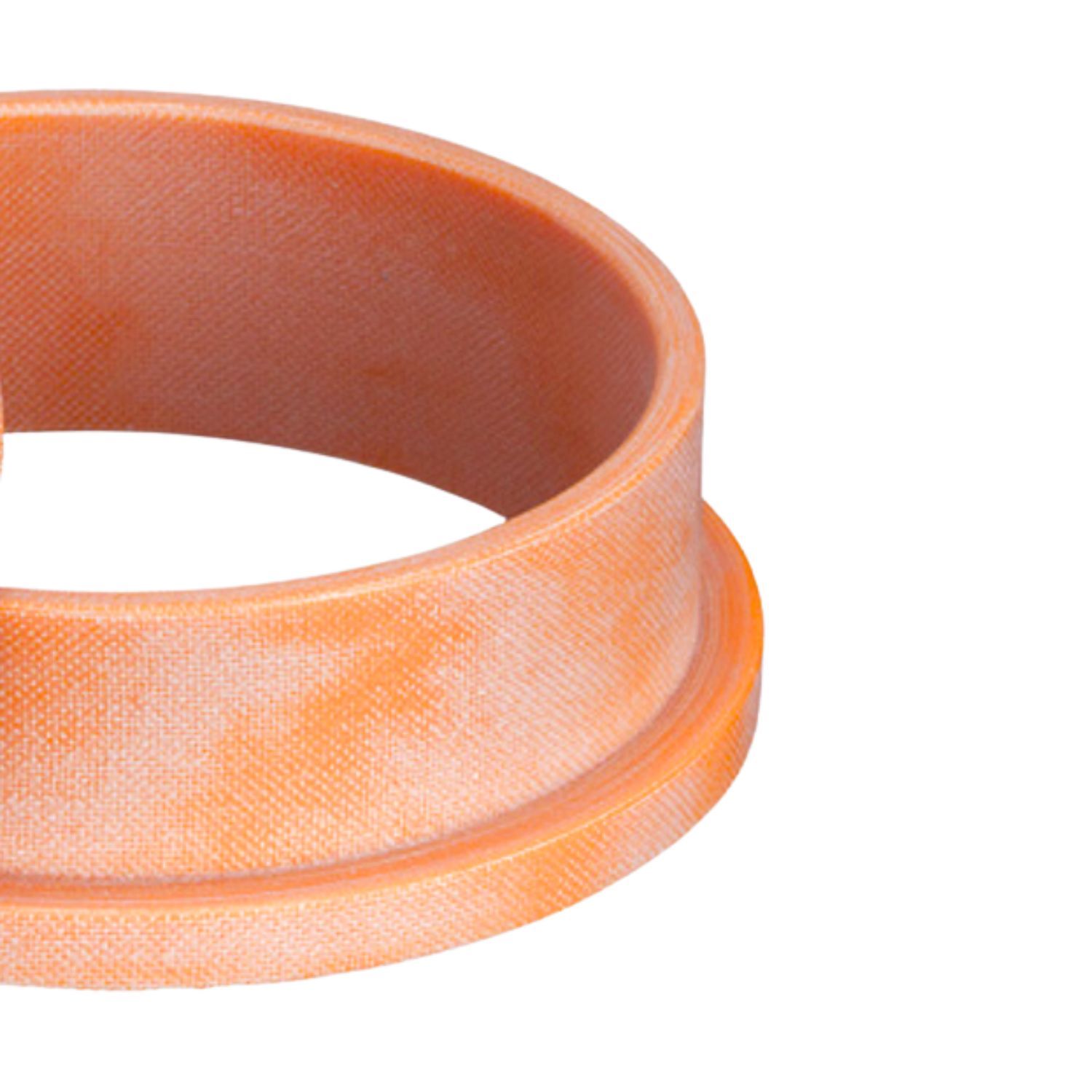
| PTFE + fiberglass filament-wound | 0.3–0.5 | Structural bushings with PTFE bearing surface. Higher load capacity than PTFE sheet. Osmotic pump rods, water-lubricated applications. | More expensive. Minimum bore size constraints from winding process. |
| Polymer composite (Iglidur, Igus type) | 0.2–0.6 | Light-duty, maintenance-free, cost-effective. Automation, conveyor pivots, small oscillating assemblies. | Lower load and temperature capacity than metal. Good option when replacing greased bronze in light service. |
| Bimetal (steel backing + bronze/Babbitt overlay) | 3.0–6.0 | Engine main and connecting rod bearings, high-speed rotating shafts, turbomachinery. Hydrodynamic film lubrication required. | Requires continuous pressurized oil supply. Fails rapidly if oil supply is lost. |
PV = pressure × velocity (MPa × m/s). The PV limit is the maximum combined load that the bearing material can sustain without generating destructive heat. Always verify with the manufacturer's data for the specific grade.
Lubrication regimes
| Regime | Condition | Typical Materials |
|---|---|---|
| Hydrodynamic (full film) | Continuous rotation at speed. Pressurized oil supply maintains full separation of bearing and shaft surfaces. | Bimetal bearings. No direct contact — longest bearing life if oil supply maintained. |
| Boundary lubrication | Start-stop, slow oscillation, or intermittent motion where full film cannot develop. Metal-to-metal contact occurs at peaks. | Bronze + graphite, PTFE composite, polymer composites. Material must tolerate intermittent contact. |
| Dry running (no lubricant) | Applications where contamination of lubricant is unacceptable, or where re-lubrication is impossible. | PTFE composite, carbon-graphite, specialty polymers. Significantly lower load and speed limits apply. |
Materials
Available bearing materials
CuSn8 Bronze
CuPb24Sn Bronze
Sintered Bronze (oil-impregnated)
Bronze + Graphite Plugs
PTFE Composite
Filament-Wound PTFE/Glass
Polymer Composite (PA, POM, PEEK)
Bimetal (Steel + Overlay)
Need plain bearings for your application?
Send us shaft diameter, housing bore, load, speed, and operating environment — we'll specify the right material and supply in the exact dimensions you need.
Request a Quote