
Hydraulic Seals
Wiper, rod, piston, and guide seals for hydraulic cylinders and valves — custom-machined to your exact bore and operating conditions.
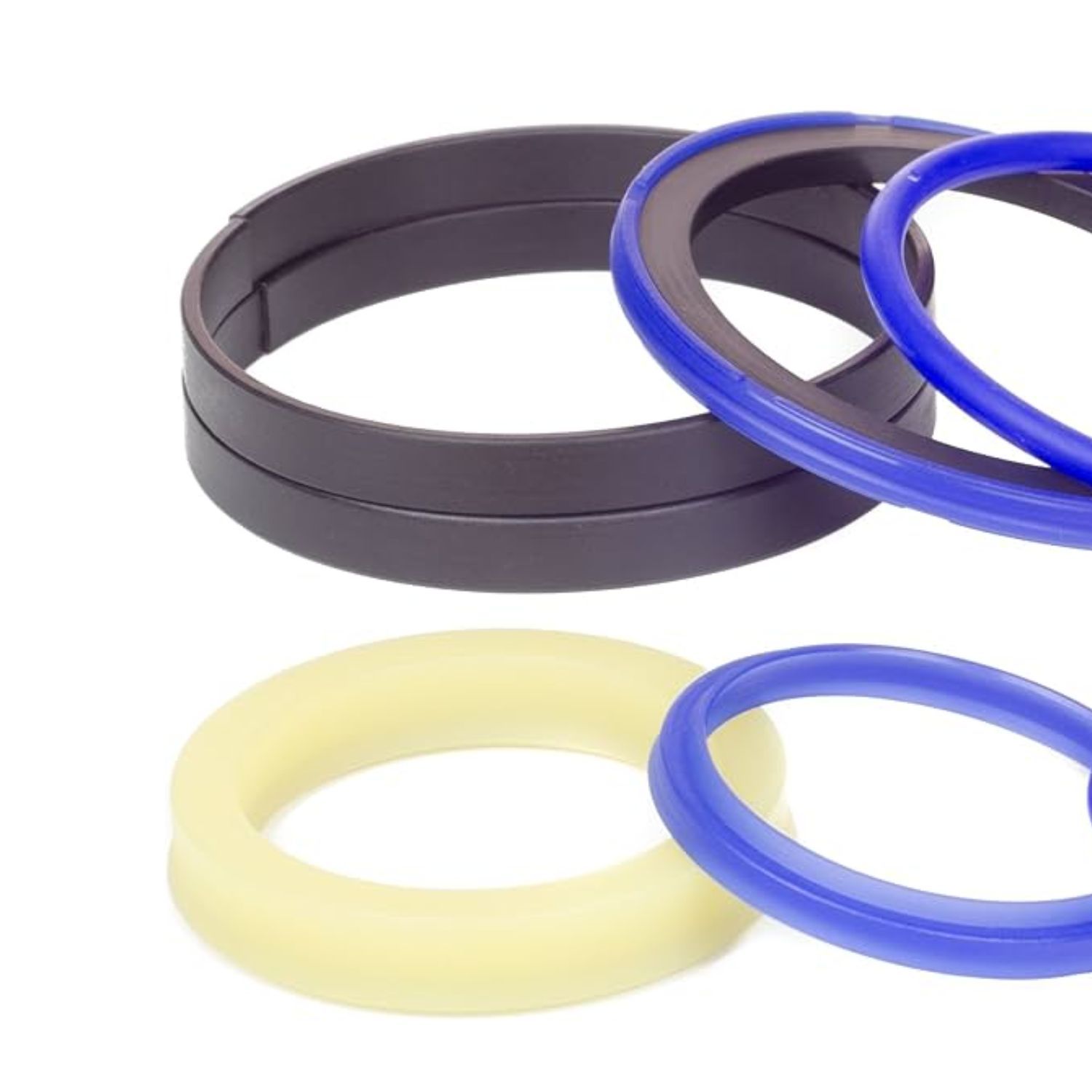
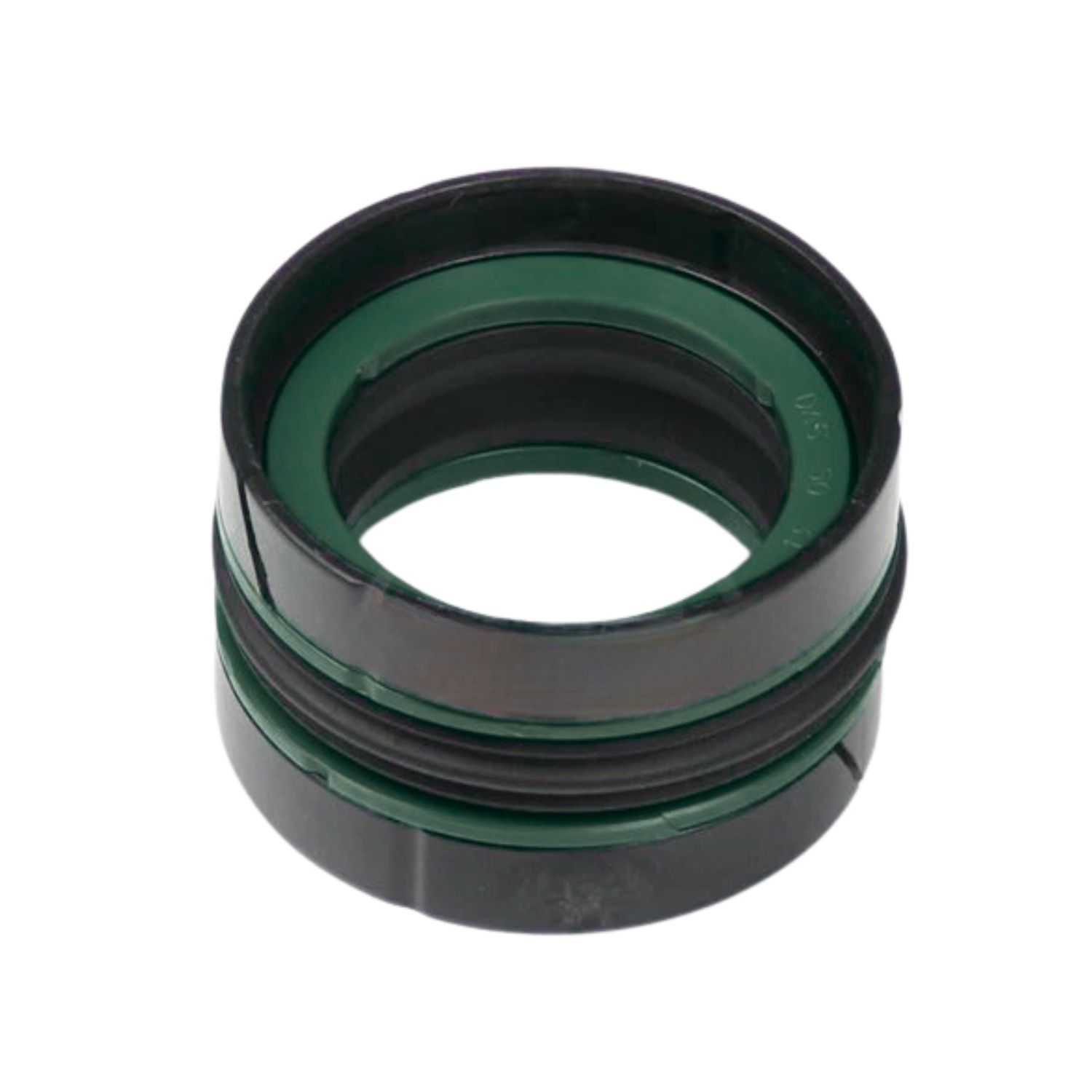
Overview
Heavy-duty hydraulic sealing for trouble-free operations
Hydraulic seals are the components that make hydraulic cylinders, pumps, and valves function reliably. Without them, the pressure energy that drives construction equipment, presses, agricultural machinery, and aerospace actuators dissipates as leakage — and a leaking hydraulic system is both a safety hazard and a maintenance cost center.
A hydraulic cylinder requires a minimum of four sealing elements working together: a rod seal (primary pressure containment), a wiper seal (contamination exclusion), a piston seal (differential pressure), and a guide ring (load bearing and alignment). Getting the profile and material wrong on any one of them compromises the entire assembly.
We supply hydraulic seals individually and in complete kits, in all standard profiles and non-standard dimensions. Custom machining is available for unusual bore sizes, modified profiles, or materials suited to extreme service conditions.
Design Reference
Hydraulic seal profiles and functions
Four-position cylinder seal configuration
Each position in a hydraulic cylinder has a different mechanical requirement. The profiles are not interchangeable — substituting a piston seal in a rod position, or vice versa, leads to immediate failure.
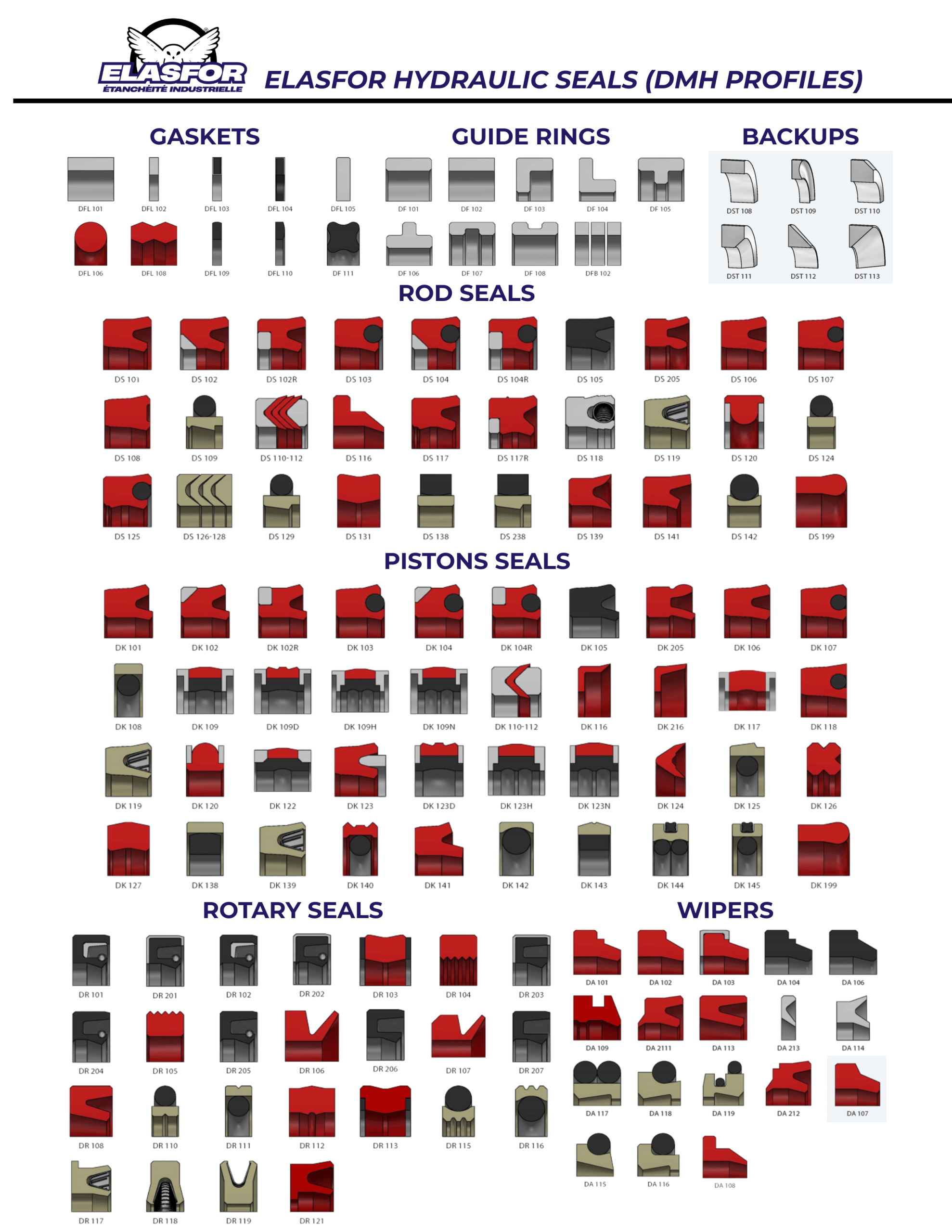
| Position | Function | Common Profiles |
|---|---|---|
| Rod seal | Primary pressure containment on the rod side. Prevents hydraulic fluid from exiting past the rod during extension and retraction. | U-cup (single-acting), Stepseal, loaded lip seal. Asymmetric profiles designed for one-way pressure loading. |
| Wiper seal (scraper) | Removes contamination (dirt, water, abrasive particles) from the rod on the return stroke. Protects the rod seal from abrasive damage. | Single-lip wiper, double-lip wiper, metal-cased wiper for aggressive environments. |
| Piston seal | Seals between the piston and the cylinder bore. Must hold differential pressure from both sides in double-acting cylinders. | U-cup (double-acting), T-seal (with backup rings), cup packing. Symmetric profiles for bidirectional loading. |
| Guide ring / wear ring | Absorbs side loads and prevents metal-to-metal contact between rod/piston and bore. Not a pressure seal. | Bronze-filled PTFE, phenolic resin, PEEK. Width and clearance selected for the side load. |
Materials
Hydraulic seal materials
Polyurethane (PU)
NBR (Nitrile)
FKM (Viton®)
PTFE Composite
Need hydraulic seals or a complete cylinder kit?
Give us the bore diameter, rod diameter, cylinder stroke, operating pressure, and fluid — we'll specify the complete seal configuration and supply it as individual seals or a full kit.
Request a Quote